Where API 5L Pipe Actually Gets Used — Beyond Oil and Gas
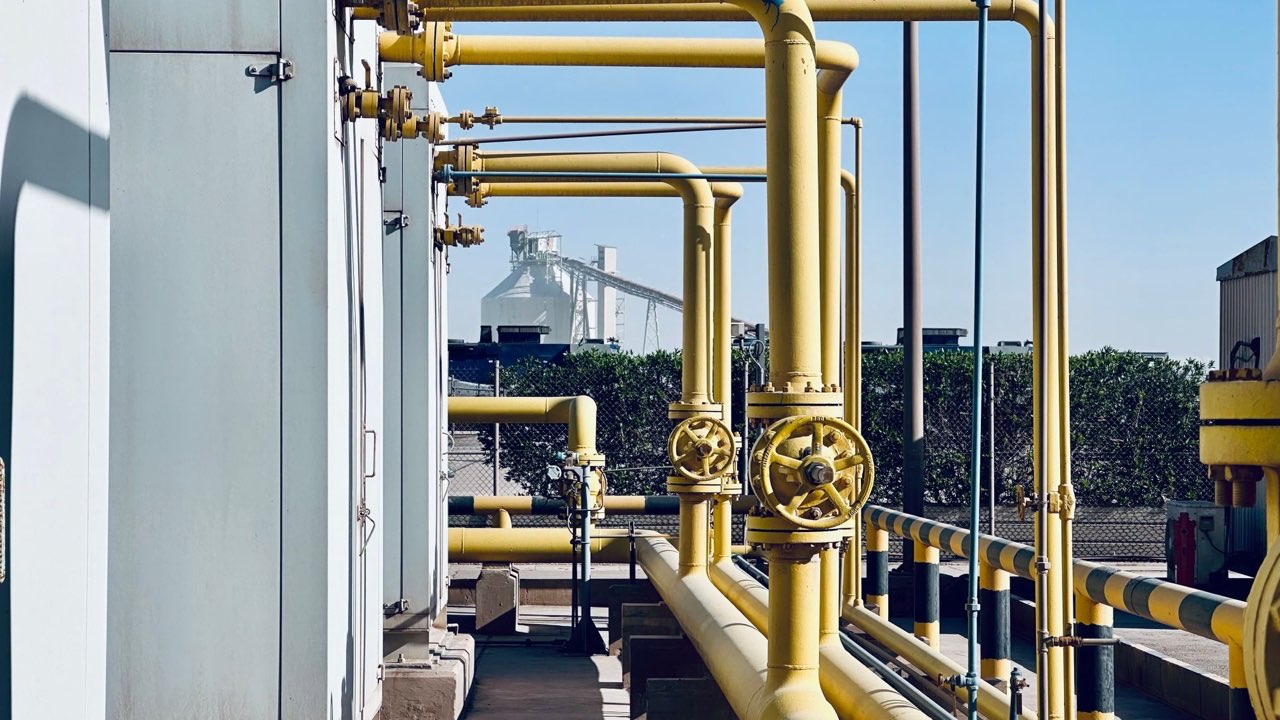
The common assumption is that API pipe is oil and gas pipe. The American Petroleum Institute wrote the standard, the grades are named for yield strength rather than application, and the imagery that comes to mind is a cross-country pipeline moving crude oil across a desert or tundra. That association is accurate — API 5L was developed for hydrocarbon transmission and remains the dominant material specification for that application — but it significantly understates where the standard actually gets used.
API 5L pipe shows up in water infrastructure, mining operations, chemical processing, and industrial utilities. In each of these industries, the choice to specify API 5L rather than a general-purpose pipe standard reflects something specific about what that industry needs: a combination of pressure capacity, consistent weldability, chemical traceability, and the availability of third-party test certification that other standards don’t always provide in the same package.
Oil and Gas Transmission: The Original Application
The application API 5L was designed for remains its largest market. Onshore and offshore transmission pipelines moving crude oil, natural gas, natural gas liquids, and refined products to processing facilities and distribution networks specify API 5L across nearly all diameter and pressure ranges.
The grades used vary with operating pressure and diameter. Smaller diameter, moderate pressure gathering lines often use X42 or X52. Long-distance, high-pressure transmission lines increasingly use X65 and X70, where the higher yield strength allows thinner wall pipe that reduces material weight and welding cost across thousands of kilometers of installation. Offshore pipelines, which face external hydrostatic pressure in addition to internal operating pressure, require careful wall thickness calculation that accounts for both load cases simultaneously — typically landing on heavier schedules than comparable onshore pipe at the same internal pressure.
The PSL2 product specification level is standard for most transmission service: it mandates Charpy impact testing, tighter chemistry controls affecting weldability, and more extensive nondestructive examination than PSL1. For a pipeline that will be welded in the field by multiple crews across varying weather conditions, the weldability guarantee built into PSL2 chemistry requirements reduces the risk of heat-affected zone cracking that can compromise long-term integrity.
Water Infrastructure: A Larger Market Than Most People Expect
Large-diameter water transmission mains — the pipes that move treated water from treatment plants to distribution systems, or raw water from reservoirs to treatment — frequently specify API 5L or equivalent steel pipe standards. Diameters above 600mm (24 inches) are difficult to source in ductile iron and prohibitively expensive in stainless; welded steel pipe to API 5L or AWWA C200 (which references API 5L dimensions and chemistry) is the standard solution.
The pressure ratings required for water transmission mains are often moderate by oil and gas standards — typically below 20 bar — but the pipe diameters are large, the burial depths are significant, and the design life expectations are long (50 to 100 years in many jurisdictions). These factors push wall thickness selection toward heavier schedules than operating pressure alone would require, and the corrosion allowance requirement for buried steel pipe in contact with soil drives the use of external coating and cathodic protection systems similar to those used in gas transmission.
The chemistry and mechanical property documentation required by API 5L PSL2 also serves water infrastructure well: regulatory frameworks for drinking water infrastructure increasingly require material traceability that can be maintained from the production heat through installation, and mill certificates with heat analysis and mechanical test data provide that traceability.
Mining and Mineral Processing: Slurry Lines
Mining operations use steel pipe to transport slurry — a mixture of water and crushed ore — from processing mills to tailings storage facilities, and sometimes to move concentrate over significant distances to port or smelter facilities. These slurry pipelines represent some of the most demanding pipe service conditions in any industry.
Slurry is abrasive and often corrosive. The solids content creates internal erosion that reduces wall thickness over time at rates that vary with particle size, concentration, velocity, and pipe orientation. The operating pressures in long-distance concentrate pipelines can be high — some exceed the pressure ratings of common schedule pipe at standard grades — and the lines operate continuously, making unplanned shutdowns extremely costly.
API 5L pipe is specified for slurry service because its high-strength grades allow the wall thickness to be engineered precisely for the combination of operating pressure and expected erosion rate over the design life. The alternative — using thicker-wall lower-grade pipe — adds unnecessary weight and installation cost. The PSL2 chemistry and toughness requirements also matter: slurry pipelines in remote locations are difficult to inspect and repair, and the mechanical property assurance that PSL2 provides reduces the risk of brittle fracture in cold operating environments.
Chemical and Petrochemical: Feedstock and Product Lines
Within chemical processing complexes, the piping inside process units is typically specified to ASME B31.3 and uses ASTM A106 or A53 pipe. But the pipelines connecting those complexes to external supply sources — natural gas feeds, liquid hydrocarbon feedstocks, intermediate product transfer to storage or export — follow transmission pipeline design codes and specify API pipe full form and applications per API 5L.
The dividing line is typically the facility battery limit. Inside the limit, process piping codes govern. Outside the limit, where pipe connects to the wider pipeline network, API 5L is the standard material specification. A large ethylene cracker, for example, will have API 5L ethane feed lines from the gas processing plant and API 5L ethylene product lines to storage and distribution, while the cracking furnaces and separation columns inside the fence are served by ASTM-specified process pipe.
The interface between these two material systems — where battery limit valves connect transmission pipe to process pipe — requires careful attention to compatibility: matching outside diameters (which are the same for equivalent nominal sizes), compatible end preparations for welding, and documentation that correctly tracks both material standards across the joint.
Industrial Utilities: Compressed Air and High-Pressure Water
Large industrial facilities — steel mills, cement plants, automotive manufacturing complexes — use high-pressure compressed air and cooling water at pressures and flow volumes that exceed what standard black iron pipe or Schedule 40 ASTM pipe can practically deliver. API 5L pipe, with its higher yield strengths and more consistent mechanical properties, provides the pressure capacity and weld quality that large utility systems require.
The application here is typically X42 or X52 at moderate diameters — smaller than transmission pipeline service but larger than typical process piping. The value of API 5L in this context is primarily the mechanical property consistency and the third-party test certification: in a manufacturing facility where a compressed air system feeds multiple production lines, a failure carries significant production cost consequences, and the material assurance that PSL2 certification provides justifies the modest premium over general-purpose pipe.
What These Applications Have in Common
Across all of these industries, the choice of API 5L reflects the same underlying requirements: high or moderate pressure service where yield strength determines wall thickness; field or shop welding where chemistry consistency is important; long design life where initial material quality affects long-term reliability; and regulatory or owner requirements for documented material traceability.
The industries that specify API 5L are not all in the oil and gas business. They are industries that need a well-characterized, consistently manufactured, thoroughly documented pipe product — and API 5L is the standard that delivers those properties most reliably at the sizes and grades where carbon steel pipe makes economic sense.